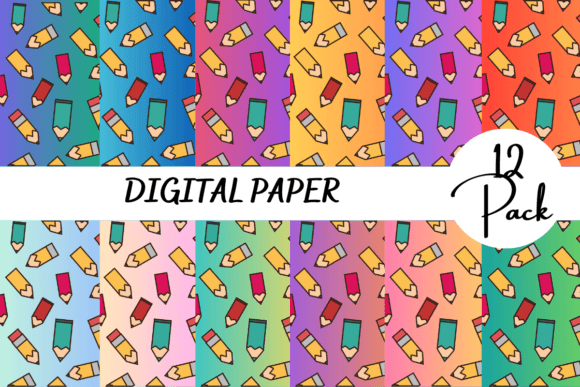
Gradient Pencil Digital Papers
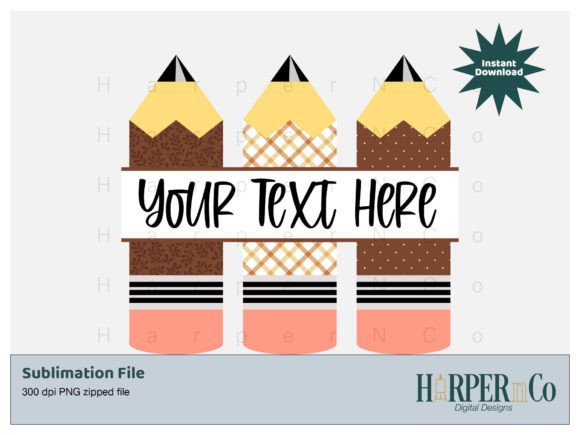
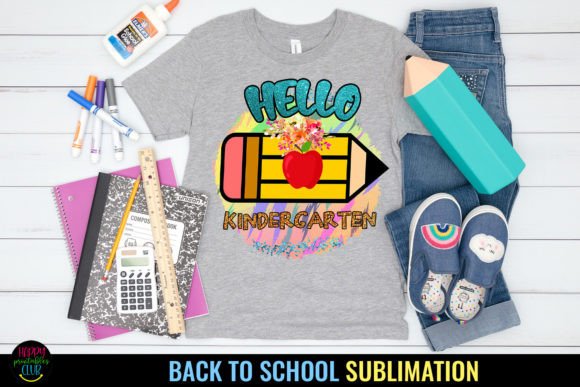
Gradient Pencil Digital Papers refer to a curated set of 12 high-resolution digital background textures—each sized at 1080×1080 pixels, saved in PNG format, and rendered at 300 dpi. These papers combine smooth color gradients with subtle, hand-drawn pencil sketch elements. They are designed for digital use in graphic design, print-on-demand (POD), social media content creation, digital scrapbooking, and educational resource development.
Who Might Consider Gradient Pencil Digital Papers?
This collection is most relevant to creators who need versatile, ready-to-use backgrounds that balance visual interest with thematic appropriateness—particularly around academic, learning-focused, or youth-oriented projects. Common users include:
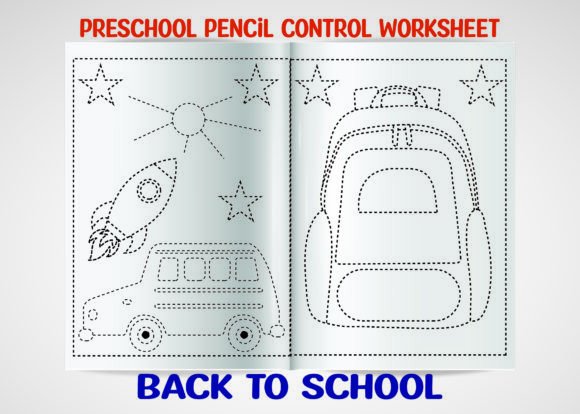
- Digital educators building printable worksheets, lesson slides, or classroom posters;
- POD designers developing back-to-school themed stationery, planners, or apparel graphics;
- Social media managers or bloggers curating visually cohesive back-to-school content calendars;
- Independent artists creating themed digital stickers, Canva templates, or Notion dashboard assets;
- Students or hobbyists designing personal study tools, habit trackers, or creative journals.
Key Benefits of This Collection
The primary strengths of Gradient Pencil Digital Papers lie in their technical consistency and intentional aesthetic pairing. Each file maintains uniform dimensions and resolution, simplifying integration into design workflows across platforms like Adobe Photoshop, Illustrator, Canva, or Procreate. The 300 dpi output supports both screen display and professional printing without upscaling compromises.
The combination of gradient transitions and pencil textures serves functional and expressive purposes: gradients add depth and modern visual appeal, while pencil motifs reinforce themes of learning, drafting, creativity, and approachability. Unlike flat-color or photographic backgrounds, this hybrid style avoids visual competition with overlaid text or icons—making it especially useful for educational infographics or minimalist planner layouts.
Because the files are delivered as transparent-background PNGs, users retain full control over layering, blending modes, and scaling—without relying on external editing tools to remove backgrounds or adjust transparency.
Tradeoffs and Practical Considerations
While the collection offers strong stylistic cohesion, its focused theme also defines its scope. All 12 papers center on back-to-school and learning-related aesthetics. Users seeking seasonal variety (e.g., holiday, summer, or nature themes) or more neutral, minimalist, or photorealistic options will find this set limited in range.
Additionally, the fixed square aspect ratio (1080×1080) works well for social media posts, digital stickers, and many print formats—but may require cropping or padding for use in standard letter-size (8.5″×11″) or A4 documents unless adjusted intentionally. Designers working primarily with portrait- or landscape-oriented templates should plan for minor resizing steps.
The absence of editable source files (e.g., layered PSD or vector AI files) means customization is constrained to what’s possible within raster-based editing. Adjusting individual gradient stops or repositioning pencil strokes isn’t feasible without redrawing elements from scratch.
When This Collection Is a Strong Fit
Gradient Pencil Digital Papers are especially well-suited for time-sensitive, theme-aligned projects where visual consistency matters. For example:
- A teacher preparing a month-long series of printable reading logs and goal trackers for students;
- A small business launching a back-to-school capsule collection of digital planners and printable checklists;
- A content creator building a cohesive Instagram feed or Pinterest board centered on student wellness and academic motivation;
- A designer sourcing affordable, royalty-free assets for a limited-run POD product line tied to August/September launches.
In these cases, the collection provides immediate visual direction without requiring custom illustration or extensive color matching—reducing iteration time while maintaining quality and thematic relevance.
When Alternatives May Be More Appropriate
Consider other options if your goals include:
- Highly branded or client-specific visuals: If you need precise brand color alignment, custom typography integration, or unique iconography, generic digital papers—even well-designed ones—may require significant adaptation or fail to meet brand guidelines.
- Long-term, multi-seasonal asset libraries: A single themed pack lacks flexibility across calendar shifts. Subscribing to broader digital paper marketplaces or licensing customizable template kits may offer better long-term value.
- Scalable vector-based applications: For large-format printing (e.g., banners, posters) or responsive web design, SVG or EPS assets provide infinite scalability. Raster PNGs, even at 300 dpi, have inherent size limits.
- Accessibility-first design: While aesthetically engaging, gradient-heavy backgrounds can reduce text contrast. If WCAG compliance is required (e.g., for public education materials), verify sufficient contrast ratios after overlaying text—and be prepared to adjust brightness, add overlays, or select lighter variants.
Making an Informed Decision
To determine whether Gradient Pencil Digital Papers align with your needs, ask yourself three questions:
- Is my project time-bound and thematically specific? If you’re developing resources for late summer or early fall—especially for learners, educators, or academic support contexts—this collection delivers targeted relevance.
- Do I prioritize ease of integration over deep customization? If your workflow favors drag-and-drop usability and consistent technical specs over granular control, the uniform PNG format and resolution simplify execution.
- Does visual tone matter more than functional versatility? If conveying warmth, approachability, and creative energy is central to your message—and you don’t need photorealism, strict neutrality, or seasonal breadth—then the pencil-and-gradient blend serves that intent effectively.
If two or more answers are “yes,” the collection is likely a practical match. If not, explore alternatives such as customizable digital paper bundles, subscription-based design asset platforms, or commissioning original textures aligned to your exact specifications.
Ultimately, Gradient Pencil Digital Papers represent a purpose-built tool—not a universal solution. Their value emerges most clearly when matched thoughtfully to context, timeline, and creative intent.